/Dealer%20Specialties%20Logo.png?width=200&height=35&name=Dealer%20Specialties%20Logo.png)
Buyers decide within seconds whether a vehicle is worth their time — and that decision happens on your VDP, not your lot. If your car dealership photography is inconsistent, poorly lit, or taken on a phone with a chain-link fence in the background, shoppers don't call. They click to the next listing.
The good news: Photo consistency is a fixable problem. Here's what inconsistent vehicle photos actually look like, why they hurt your bottom line, and how to build a standardized process that works whether you're running one store or five.
What Does Inconsistent Car Dealership Photography Look Like?
Most dealers know bad photos when they see them. The harder problem is recognizing inconsistency, which often hides in plain sight across your inventory.
Common signs include:
-
Mixed backgrounds. Some vehicles shot on clean concrete, others in a cluttered service bay or a corner of your back lot.
-
Varying shot counts. Some listings have 20 photos; others have four.
-
Inconsistent angles. One vehicle has a full exterior walk-around. The next skips the driver's side entirely.
-
Lighting mismatches. Photos taken at different times of day, in different weather, with visible shadows or harsh glare.
-
Branding gaps. No consistent overlay, watermark, or color treatment tying listings back to your store.
Any one of these tells a buyer something you don't want to communicate: that you're not paying attention. Multiply that across 80 or 100 units of inventory, and the impact on VDP performance adds up fast.
Why Does Photo Quality and Consistency Impact Buyer Trust?
Online car shoppers are comparison shopping. Before they call your store, they've already looked at listings on AutoTrader, Cars.com, and CarGurus — platforms where national dealerships and large groups consistently post 30+ professional photos per vehicle.
When your listings don't match that standard, shoppers don't necessarily think "This dealership has bad photos." They think, "I'm not sure about this car" — and move on. Photo quality functions as a proxy for trust. A shopper who can't clearly see the front bumper starts to wonder what you're hiding.
Consistency compounds this effect. When every vehicle on your lot looks like it belongs to the same professional inventory — same background treatment, same shot sequence, same lighting quality — your dealership reads as organized, credible, and competitive with the big players.
Where Do Most Dealerships Go Wrong With Their Photo Process?
Even dealers who understand the value of good photography often run into the same workflow breakdowns.
Relying on staff with no photography training. Asking a lot porter or a BDC coordinator to shoot a fresh trade-in with their phone isn't a reliable process. Without consistent training, you get inconsistent output.
No standardized shot list. If the person shooting doesn't know which 25 angles to capture in which order, every vehicle will look different. A shot list takes about 10 minutes to create and eliminates most of the variation.
Backgrounds that can't be controlled. Shooting on an open lot in variable weather, next to other vehicles, with signage and lot clutter in the frame — you can't standardize what you can't control.
No editing or post-processing step. Even a solid shoot produces photos that need a consistent crop, brightness correction, and background treatment before they go live. Without that step, raw inconsistency hits your VDPs.
Delays between acquisition and listing. Inventory that sits for 48–72 hours without photos is inventory that isn't selling. Slow photo turnaround means slower days-on-lot.
How Do You Standardize Vehicle Photos Across Your Dealership?
Building a repeatable car dealership photography process comes down to three things: process, environment, and post-production.
Shooting process. Define a fixed shot list — typically 25–40 exterior and interior angles — and require every vehicle to be documented in the same sequence. Exterior shots should include all four corners, front, rear, and both profile sides. Interior should cover dash, driver's seat, back seat, and any notable features. Lock this into a checklist your team follows on every unit.
Backgrounds and lighting. Dedicated photo spots matter more than most dealers realize. Even a painted concrete pad with consistent lighting eliminates the single biggest source of photo variation. If controlled outdoor lighting isn't feasible, a portable photo studio setup or a dedicated indoor bay can work. The goal is the same: same surface, same light, every time.
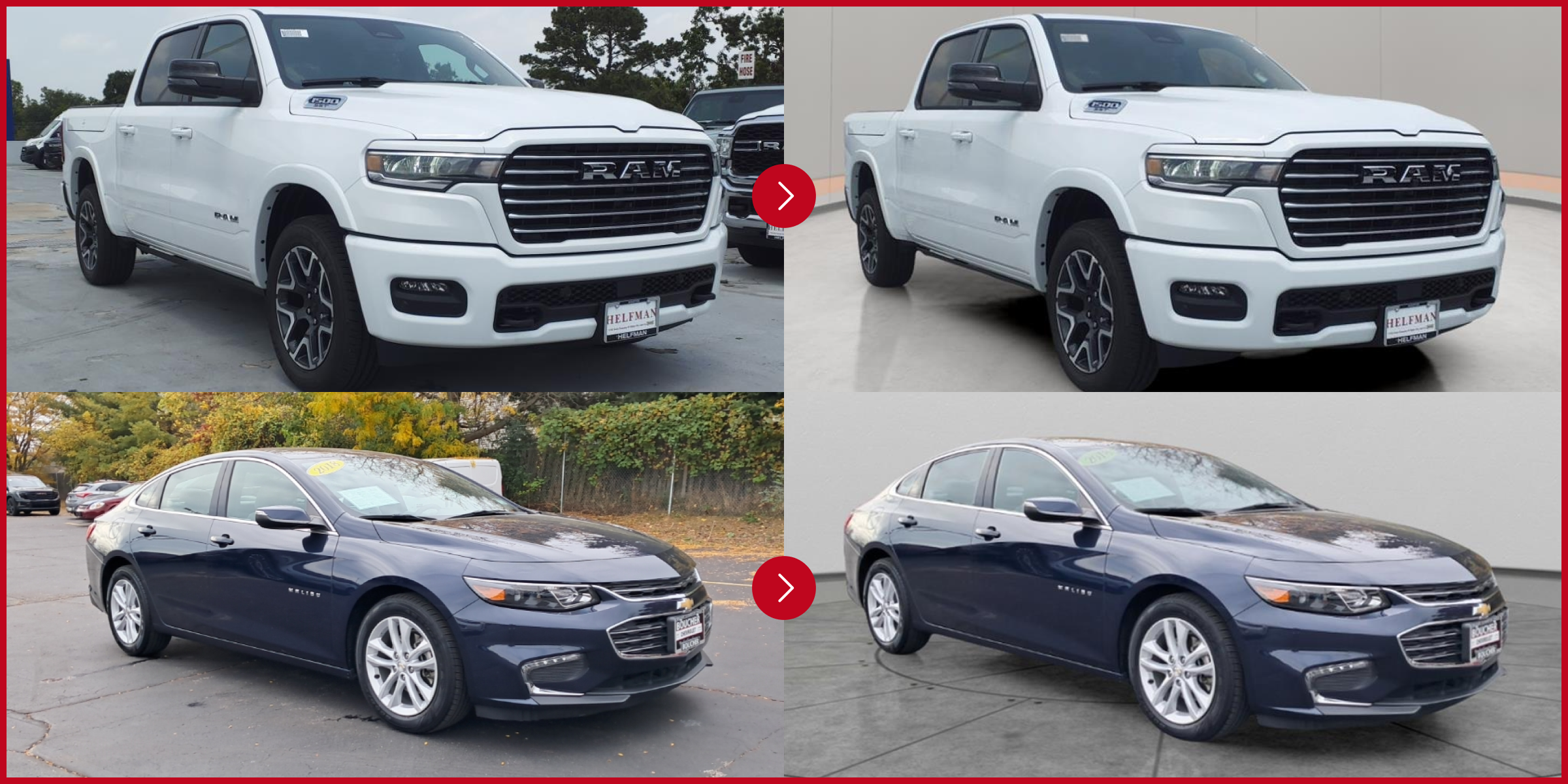
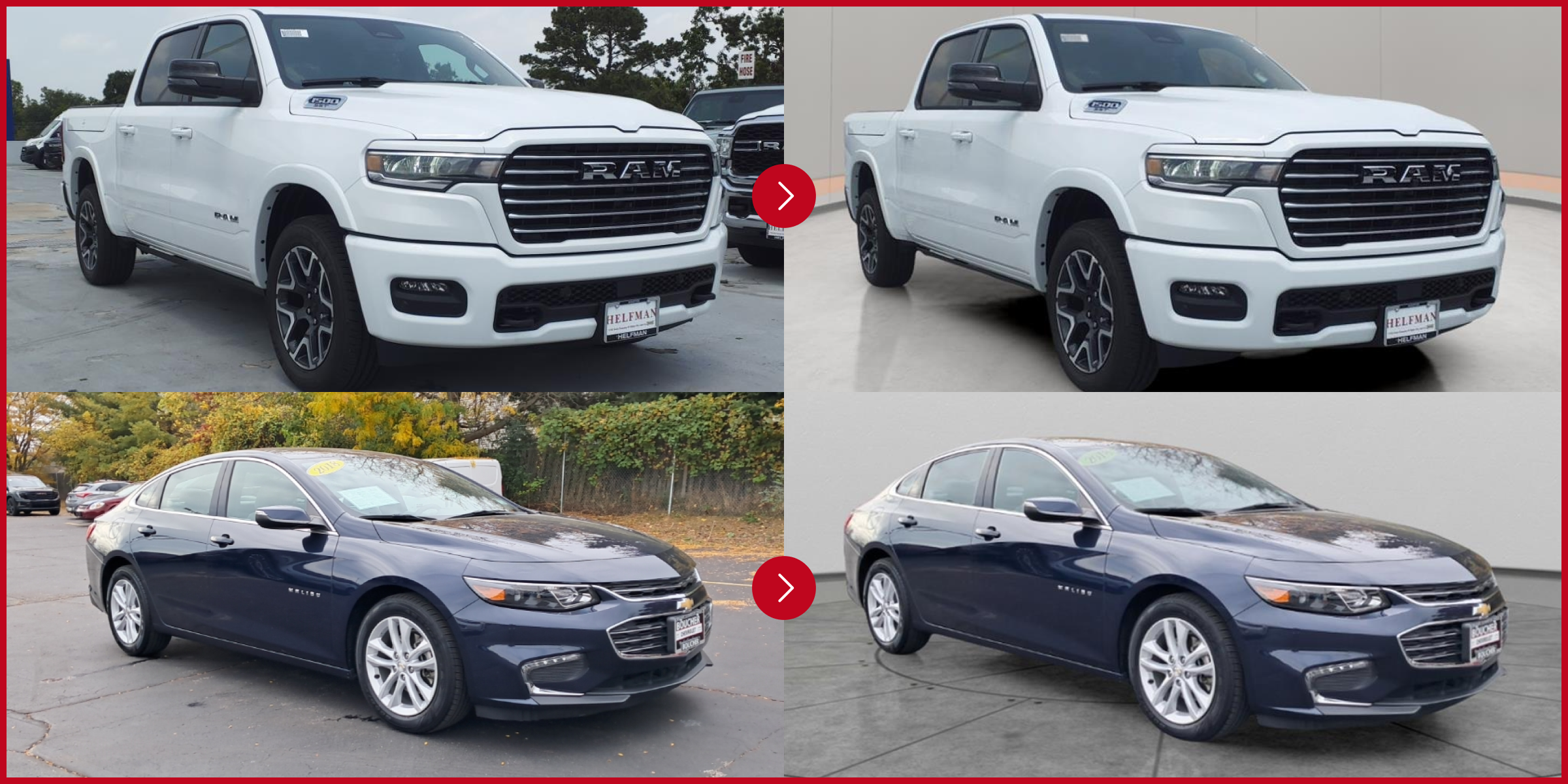
Editing and branding. Every photo that goes live should go through at least a basic editing pass — exposure normalization, crop standardization, and a branded overlay if your store uses one. This is where AI background removal tools have become a real option for dealerships that want a clean, professional look without building a dedicated photo studio.
How Does AI Background Removal Help Maintain Photo Consistency?
AI background removal solves one of the most stubborn problems in dealership photography: the environment you're shooting in.
Even with a consistent shot list and good lighting, backgrounds change — weather, other vehicles moving into frame, lot clutter. AI background removal technology automatically replaces the background with a clean, neutral surface, creating a consistent look across every vehicle in your inventory, regardless of where or when it was shot.
For dealers managing high volume or operating multiple rooftops, this is a meaningful operational advantage. You're not dependent on perfect shooting conditions. Every unit gets the same polished presentation. And your listings look as professional as the national platforms shoppers are comparing you to.
What's the Next Step for Getting Your Photo Process Under Control?
Inconsistent car dealership photography is a revenue problem — but it's one with a clear fix. Whether you need a full-service photography partner who comes to your lot, AI-powered tools to clean up what your team is already shooting, or both, the right process starts with understanding where your current workflow is breaking down.
The team at Dealer Specialties® has helped 3,000+ dealerships nationwide build inventory merchandising processes that are consistent, scalable, and built around how dealers actually operate.
Frequently Asked Questions
How many photos should a dealership take per vehicle?
Most industry best practices recommend 25–40 photos per vehicle, covering all four exterior corners, front and rear views, both profile sides, and full interior documentation including dash, driver's seat, rear seating, and key features. Higher photo counts are consistently correlated with more VDP engagement and more leads.
What's the best background for car dealership photography?
A clean, neutral background — painted concrete, a controlled studio backdrop, or an AI-replaced background — produces the most consistent, professional results. The goal is a surface that doesn't distract from the vehicle and doesn't vary from unit to unit.
What is AI background removal for vehicle photos?
AI background removal technology automatically identifies the vehicle in an image and replaces the original background with a clean, neutral surface. For dealerships, this creates consistent-looking inventory photos without requiring a dedicated studio or controlled shooting environment.
Can inconsistent photos really hurt lead volume?
Yes. Buyers form impressions quickly on VDPs, and poor or inconsistent photos create doubt about the vehicle and the dealership. Listings with higher photo counts and professional-quality images consistently outperform lower-quality alternatives on engagement metrics.
How does Dealer Specialties® help with photo consistency?
Dealer Specialties® sends professional photographers directly to your lot, handles the full shoot and post-production process, and distributes finished photos to 200+ listing sites automatically — removing the photo workflow from your team's plate entirely.